Showing posts with label Information. Show all posts

Tuesday, September 28, 2010

Howard Schultz

Born 19 July, 1953
Chairman and CEO, Starbucks

In 1981, working as the General Manager of Hammarplast, a Swedish drip coffeemaker manufacturer, Schultz traveled from New York to Seattle to check out Starbucks, a popular coffee bean store that had been buying their machines.
“I walked away ... saying, ‘God, what a great company, what a great city. I'd love to be a part of that.’”

It took Schultz a year to convince the Starbucks owners to hire him. When they finally made him director of marketing and operations in 1982, he had another epiphany – in Italy coffee bars not only served excellent espresso, they also served as meeting places. They were a big part of Italy's societal glue, and there were 200,000 of them in the country.

The Starbucks owners resisted Schultz's plans to serve coffee in the stores, saying they didn't want to get into the restaurant business. Frustrated, Schultz quit and started his own coffee-bar business, called Il Giornale (pronounced ill jor-nahl-ee).

Schultz drew up plans to raise an initial $400,000 in seed capital and another $1.25 million in equity - enough to launch at least eight espresso bars and prove the concept would work in Seattle and elsewhere. The seed capital was raised by the end of January 1986, but it took Schultz until the end of the year to raise the remaining $1.25 million.
He made presentations to 242 potential investors, 217 of whom said no. Many who heard Schultz's hour-long presentation saw coffee as a commodity business and thought that Schultz's espresso-bar concept lacked any basis for sustainable competitive advantage (no patent on dark roast, no advantage in purchasing coffee beans, no way to bar the entry of imitative competitors). Some noted that consumption of coffee had been declining since the mid-1960s, others were skeptical that people would pay $1.50 or more for a cup of coffee, and still others were turned off by the company's hard-to-pronounce name.

Being rejected by so many potential investors was disheartening. Nonetheless, Schultz continued to display passion and enthusiasm in making his pitch and never doubted that his plan would work. He ended up raising $1.65 million from about 30 investors; five of whom became directors of the new company.

The first Il Giornale store opened in April 1986. On the first day, 300 customers had been served, and within six months, Il Giornale was serving more than 1,000 customers a day.
Six months after opening the first store, Il Giornale opened a second store in another downtown building. A third store was opened in Vancouver in April 1987. Vancouver was chosen to test the transferability of the company's business concept outside Seattle. To reach his goal of opening 50 stores in five years, Schultz needed to dispel his investors' doubts about geographic expansion. By mid-1987 sales at the three stores were equal to $1.5 million annually.

In March 1987 the owners of Starbucks decided to sell the whole operation and in August of the same year Schultz bought it for $3.8 million.

The following Monday morning, Schultz returned to the Starbucks offices at the roasting plant, greeted all the familiar faces and accepted their congratulations, then called the staff together for a meeting on the roasting-plant floor. He began:

“All my life I have wanted to be part of a company and a group of people who share a common vision… I’m here today because I love this company. I love what it represents… In five years, I want you to look back at this day and say "I was there when it started. I helped build this company into something great."

Schultz told the group that his vision was for Starbucks to become a national company with values and guiding principles that employees could be proud of. He indicated that he wanted to include people in the decision-making process and that he would be open and honest with them.

Schultz said he believed it was essential, not just an intriguing option, for a company to respect its people, to inspire them, and to share the fruits of its success with those who contributed to its long-term value. His aspiration was for Starbucks to become the most respected brand name in coffee and for the company to be admired for its corporate responsibility. In the next few days and weeks, however, Schultz came to see that the unity and morale at Starbucks had deteriorated badly in the 20 months he had been at Il Giornale. Some employees were cynical and felt unappreciated. There was a feeling that prior management had abandoned them and a wariness about what the new regime would bring. Schultz determined that he would have to make it a priority to build a new relationship of mutual respect between employees and management.

As the company began to expand rapidly in the '90s, Schultz always said that the main goal was “to serve a great cup of coffee.” But attached to this goal was a principle: Schultz said he wanted “to build a company with soul.”
This led to a series of practices that were unprecedented in retail. Schultz insisted that all employees working at least 20 hours a week get comprehensive health coverage -- including coverage for unmarried spouses. Then he introduced an employee stock-option plan. These moves boosted loyalty and led to extremely low worker turnover, even though employee salaries were fairly low.

Why was Schultz so generous? He remembers his father, who struggled mightily at low-paying jobs with little to show for it when he died.

Schultz has said that his model for expanding Starbucks is McDonald's, with a few key differences. One is that Starbucks owns most of its stores, while McDonald's franchises. Schultz doesn't believe it's possible to build a strong brand around franchises -- although McDonald's is an obvious exception. Another difference is that Starbucks has managed to blossom without national advertising. Finally, Starbucks sells premium products to a fairly upscale, urban clientele.

In order to sustain the company's growth and make Starbucks a strong global brand, Schultz believed that the company had to challenge the status quo, be innovative, take risks, and alter its vision of who it was, what it did, and where it was headed. Under his guidance, management was posing a number of fundamental strategic questions:

What could Starbucks do to make its stores an even more elegant "third place" that welcomed, rewarded, and surprised customers?

What new products and new experiences could the company provide that would uniquely belong to or be associated with Starbucks?

What could coffee be, besides being hot or liquid?

How could Starbucks reach people who were not coffee drinkers?

What strategic paths should Starbucks pursue to achieve its objective of becoming the most recognized and respected brand of coffee in the world?

Monday, August 09, 2010

Review - Seven Habits Of Highly Effective People

Seven Habits Of Highly Effective People®
Dr Stephen Covey

Dr Stephen Covey is an influential management guru, whose book The Seven Habits Of Highly Effective People, became a blueprint for personal development when it was published in 1990.

Habit 1 - Be Proactive
The ability to control one's environment, rather than have it control you, as is so often the case. Self determination, choice, and the power to decide response to stimulus, conditions and circumstances

Habit 2 - Begin with the End in Mind
The habit of personal leadership - leading oneself that is, towards what you consider your aims. By developing the habit of concentrating on relevant activities you will build a platform to avoid distractions and become more productive and successful.

Habit 3 - Put First things First
The habit of personal management. This is about organising and implementing activities in line with the aims established in habit 2. Covey says that habit 2 is the first, or mental creation; habit 3 is the second, or physical creation.

Habit 4 - Think Win-Win
The habit of interpersonal leadership, necessary because achievements are largely dependent on co-operative efforts with others. He says that win-win is based on the assumption that there is plenty for everyone, and that success follows a co-operative approach more naturally than the confrontation of win-or-lose.

Habit 5 - Seek first to Understand and then to be Understood
One of the great maxims of the modern age. This is Covey's habit of communication, and it's extremely powerful. Covey helps to explain this in his simple analogy 'diagnose before you prescribe'. Simple and effective, and essential for developing and maintaining positive relationships in all aspects of life.

Habit 6 - Synergize
The habit of creative co-operation - the principle that the whole is greater than the sum of its parts, which implicitly lays down the challenge to see the good and potential in the other person's contribution.

Habit 7 - Sharpen the Saw
The habit of self renewal, says Covey, and it necessarily surrounds all the other habits, enabling and encouraging them to happen and grow. Covey interprets the self into four parts: the spiritual, mental, physical and the social/emotional, which all need feeding and developing.

Stephen Covey's Seven Habits are a simple set of rules for life - inter-related and synergistic, easy to practice and implement in practical life.

Stephen Covey's book, The 7 Habits of Highly Effective People®, has been a top-seller for the simple reason that it ignores trends and pop psychology for proven principles of fairness, integrity, honesty, and human dignity.

Wednesday, April 22, 2009

Chasing a Dream...


Historically people who have obtained tremendous success have been single-minded in their focus and determination to make their dreams come to fruition. The story of the Honda motorbike and Mister Soichiro Honda is about following through on a dream.

Soichiro Honda was a racer, a businessman, and a manufacturer. But most of all he was a dreamer. He dreamed of a better way of making piston rings, founded a small company, and began production. He dreamed of giving people everywhere an economical form of transportation.

He learned his craft as a young boy working for Tokyo Art Shokai, an automobile servicing company, as an apprentice. He was given board, lodging and a little pocket money, but received no real wages. He learned important lessons that shaped the rest of his life: Enthusiasm for hard work, an appreciation of the need to improvise, thinking for oneself, a good feel for machines. Soichiro Honda, too, learned from his boss, Yuzo Sakakibara, not just how to do repair work but how to deal with customers and the importance of taking pride in one’s technical ability. Sakakibara was the ideal teacher, both as engineer and as businessman. As well as understanding repair work he was also skilled in more complicated processes such as the manufacturing of pistons.

Honda's first motorcycle was born out of necessity in immediate post World War II Japan, where public transportation was desperately overcrowded and gasoline severely restricted.

One day in September 1946, Mr. Honda was visiting his friend, when by chance he came across a small engine - a generator engine designed for a No. 6 wireless radio from the former Imperial Army that an acquaintance had left with him. When Mr. Honda saw it, he was immediately inspired with an idea. It was a moment of destiny. This encounter determined his whole future direction, and it was from this decisive moment that the later Honda Motor Co. would be born. Mr. Honda had started out as an automobile repair mechanic. Engines were what he knew best, and on top of that, he was an inventor. It did not take him any time to come up with an idea: “Let’s use this to power a bicycle.”

His aim was to adapt them for attachment to push-bikes and, by October 1946, his small factory in Hamamatsu was making complete, makeshift motor bikes using proprietary cycle frames.

Because gasoline was in short supply, Honda adapted his motors to run on turpentine, a fuel that he himself distilled from pine trees and sold throughout Japan.

Honda's first bikes were very successful and supplies of the 500 surplus engines he had purchased ran out after a few months. Because business was good he decided to manufacture his own motors. Using the surplus motor as a model, Honda designed and built his own 50cc engine.

In November 1947, the 1/2 horsepower A-Type Honda was being manufactured and sold as a complete motorbike. It was known as the "Chimney" because it gave off a lot of smoke and a stench of turpentine.

Soichiro Honda started Honda Motor Company in 1948, at the age of 41. 1948 saw Honda introduce a 90cc version of the A-Type known as the "B-Type". By 1949 Honda came out with the "D-Type". Mr. Honda was involved in every step of the two-stroke D-Type Dream's design and manufacture. This was Honda's first motorcycle. This was far from simply slotting a motor into a pushbike frame. Honda called his machine 'The Dream', because his dream of building a complete, motorcycle had come true.

Soichiro Honda was an engineer and was always looking to produce better and more sophisticated machines. The E-Type Dream was a powerful machine capable of 50mph. It had a steel frame and proper suspension front and rear. By October 1951 the new Dream was in production at the rate of 130 units per day.

In July 1958 Honda introduced in Japan what became the world's most successful motor cycle, the C100 Super Cub. It was developed over three years to be a cheap and practical motorcycle that literally anyone could use. It was so easy to operate that even new riders could ride it as easily as a pushbike. Its innovative frame without a crossbar made it popular with the ladies and set a new trend in commuter motorcycling. The word "scooterette" was coined to describe this step-through style motorbike which sold in 50, 70 and 90cc versions.
In 1959 it was the first Honda motorcycle sold in the U.S., eventually becoming the world's best-selling vehicle (30 million to date). As proof the original concept and design was perfect is the fact that today's C50, C70 and C90s have only detail changes to set them apart from the machines of 25 years ago.

From there Honda went from strength to strength, moving into the manufacture of cars in 1963 with the S500 sports car. Today Honda is the largest manufacturer of motorcycles in the world and a car manufacturer with one of the best reputations for quality.

Soichiro Honda had a dream to create affordable economic motorized transport and his passion, hard work and determination saw his dreams fulfilled far past I'm sure even his expectations. Which is interesting because often we see limits to our own success.

Could Soichiro Honda possibly see that from making a few hundred motorized bicycles back in 1946 he would one day be creating a motoring icon known all over the world?

Wednesday, April 15, 2009

The Running Man

It's amazing what happens when you set yourself a goal and commit to it. About 10 weeks ago I committed to running the Calgary half-marathon on May 31st. It's been 10 years since I last ran further than a couple of blocks to the bus stop because I could see my bus coming. I'm a 190lb man with a body (so I thought) that was built for short bursts of strength. Running distances in the hundreds of metres, not thousands!

This afternoon I just completed another 10km mid-week, lunch-time run. This is after running 13.5km on Sunday. Week after week I have been consistently building my stamina by running a "long run" on Sundays that keep getting longer and longer. My first run back on February 1st, was a mere 4.67km and that exhausted me. Now I run almost three times the distance and I'm 15% faster over the whole distance. Some days it feels like I could run for ever!

My primary goal for May 31st is to finish the race. I'd love to run the 1/2 marathon in under 2 hours and right now that's an achievable goal.

What have I done to keep myself in the right frame of mind?

I look in the mirror when I get out of the shower and I say "I have the body of a runner." Now I believe it. That belief spurs me on to run when I'm not feeling 100% like I want to. That belief allows me to stretch my long runs each week and it gives me a "can-do attitude".

I have also been telling myself the next goal is a marathon, and it sounds achievable for me now... and who knows... maybe an iron man triathlon is next! (That's a 2.4-mile (3.86 km) swim, a 112-mile (180.25 km) bike ride followed by a marathon (26 miles 385 yards, 42.195 km) run, raced in that order and without a break).

It's all about changing what you believe in yourself. Setting stretch goals, pushing yourself and being consistent in application and results follow.

Monday, December 15, 2008

Passion Test

Last night I finished doing a passion test. It's easy enough to do for yourself and it's interesting becasue it gets you thinking about exactly what it is you love to do.

  1. Simply write your passions on individual 3x5 cards - one passion per card.
  2. Then compare two at a time and decide which you are more passionate about.
  3. Keep cycling through until you have put in order from most to least your passions.
It was most illuminating. I was quite surprised how my passions are different to where I'm spending my time... and actaully quite different to where I had planned to spend my time.

Time to re-organize!

Wednesday, December 10, 2008

No Guarantees

Larry Iwan was a gentleman I worked with for almost three years. I haven't actually seen him since my last day at that company just over a year ago. He retired last Friday apparently in good health and died on Monday. He didn't even get a day off.

There are no guarantees in life.

Obituary from Calgary Herald

IWAN Lawrence John "Lars" May 9, 1938 - December 8, 2008

The Following Obituary Contains Memories That Could Be Offensive To Some Readers. Did that grab your attention?
Good, because the guy that the following is about, liked to get peoples attention. Lawrence John Iwan, or Larry as he was known to many and Lars to many more, unexpectedly passed away this past Monday morning at 70 years of age. All things considered we think that is about thirty years too soon.

To say that Larry cut a unique path through life would be a grievous understatement and a true injustice to a man who truly saw no boundaries and made it a priority to soak up all that life had to offer every single day.
His cup was always half full even when merely a drop remained. Born in Winnipeg's north end in 1938, John and Jessie's proudly Polish boy would chase inclination, love and adventure across Canada for the next several decades, eventually settling in Calgary with his beloved wife and best friend Kathy.

Larry relished the awkward moments in life; often working tirelessly to initiate them. He was the icebreaker that every room needs. Quick witted and blessed with an extremely high IQ, he really could do anything that he set his mind to. A fistful of successful careers that included; race car driving, politics, photography, music and sales to name just a few.

Long days and busy nights with the ultimate pay off, weekends at the lake, Lars loved the lake it was his little piece of paradise. We can say with some confidence that the waters of Lake Mara will never be the same. We also suspect that insurance rates will come down now that he is off the water.

This past May to mark the occasion of his 70th birthday Lars went on a pub-crawl with his wife, kids and friends. A bus was rented, a course was charted, and like a band of merry pranksters, Lars and his posse traveled the city celebrating life's rich pageant at every stop along the way. In hindsight very apropos for a man who truly lived his life enjoying each and every stop along the way.

We love you Lars ... Now get back on that bus, the next stop has dancing girls! Larry is survived by his wife Kathy Stirling, whom he adored more than life itself, and his children, Michelle, Debbie, Dwight, Darren and Dale, their spouses Rene, Jarrett, Monique and Gail; his grandchildren Jordan, Claire, Max, Cooper and Adam and his father-in-law Donald "Radar" Stirling.

Thursday, December 04, 2008

188.8 lbs

On October 3rd When I hit my goal weight a friend of mine said, "It's all well and good to hit your target, but it'll be interesting to see where you're at three months later."

Well, this morning I weighed in at 188.8 lbs, so I guess I'm still on track!

Friday, October 03, 2008

191.2 lbs

Today is the weight goal day. Three months ago I set myself the goal of losing 10% of my body mass to drop to 190 lbs. This morning I jumped on the scales and registered a mere 191.2 lbs. My wife and I agreed that should I starve myself all day I would be able to drop the 0.3 lbs to be 190 something.

I made it!

The amazing revelation that I've come to is that after losing twenty pounds on a body most people wouldn't have said needed to lose weight, I can see there's room to lose another ten pounds, perhaps more. The last time I was weighing in the 180s I was in my early twenties. I feel ten years younger!

I feel so much better now too. All my clothes fit loosely, I've gone in at least one belt hole on all my belts. I have so much more energy and I'm fitter, due to the increase in exercise.

This increase in exercise, by the way, has been simply walking to and from work three or four days a week. It's a 45-minute walk each way, and includes a hill-climb. I still only get to the gym once or twice a week, but the walks have given me six to eight extra cardio workouts.

My portions are smaller now. I'm following the portion sizes on packaging far more closely, and I realise I don't need to eat so much to feel "full". I'm also eating more often, making sure I get in a mid-morning snack and a mid-afternoon snack. I still eat sweets and the like, but far fewer and I far less frequently. I have also cut way back on my alcohol consumption, and have replaced it with water. There are so many empty calories in alcohol, that they really tally up quickly.

So my goal is now set on five pound increments of weight loss. I'll re-assess each five pounds to see where I'd like to end up to maximise my feeling of health and well-being.

Saturday, September 27, 2008

Art Show

Today I opened up my house to show and sell my art. For me this has been a mental block, but I'm so glad to have done it now, I can start planning the next one. Although it would have been nice to see more people come out, I was very happy to have sold 6 pieces. It starts to make some room for the new creations that are in the pipeline!

"Our doubts are traitors, and make us lose the good we oft might win by fearing to attempt."
- William Shakespeare

Friday, July 11, 2008

211.4 lbs

Today I was at a friend's place and we both jumped on the scales. He recorded 212.0 lbs and I was 211.4 lbs. That's about ten pounds lighter than the heaviest I've been, but it's still more than I'd like to be. So we made a commitment to drop 10% of our body mass by October 3rd. That would have me at 190 lbs, a weight I haven't been since before I came to Canada in 2002.

My wife, Gosia, also committed to losing 10% of her body mass which would have her back at her pre-pregnancy weight. I won't say what the numbers are... women are sensitive about that kind of stuff.

Friday, October 19, 2007

Books to read...

These aren't my words, but I found them useful, especially since I like to read books that will increase my personal growth, so I thought this might be interesting to add to my blog.
Sean Wise is the Globe's monthly entrepreneurship and venture capital columnist.

Business Bibles
SEAN WISE
Globe and Mail Update
August 29, 2007 at 2:25 PM EDT

I started my life as an Entrepreneur at the ripe old age of 13. Since that time, I've without a doubt read hundreds of books on entrepreneurship, venture capital, angel investing, innovation and business leadership.
  • Often I'm asked to recommend some of the best to those looking to get a jump on their entrepreneurial education. So without further ado, here's my list:
  • The Art of the Start by Guy Kawasaki
  • How to Win Friends and Influence People by Dale Carnegie
  • Getting to Yes by Roger Fisher, William Ury, and Bruce Patton
  • The Monk who Sold his Ferrari by Robin Sharma
  • Getting Things Done by David Allan
The Art of the Start by Guy Kawasaki

This is the book I wish I wrote. Kawasaki, bestselling author on more than a half dozen business books, outlines the what, the why and most of all the how of starting a new venture. This book covers topics including but not limited to:
  • The Art of Raising Capital
  • The Art of Pitching
  • The Art of Bootstrapping
  • The Art of Recruiting
  • The Art of Being a Mensch
The former Chief Evangelist for Apple and founder of ultra successful seed fund, Silicon Valley's Garage Ventures, has taken the blogosphere by storm these last few years, expanding his early works and leveraging his network to share insights. Kawasaki is often controversial, and sometimes arrogant, but his lessons are almost always extremely valuable. For those reasons, Kawasaki is a must read for all founders and funders.

How to Win Friends and Influence People by Dale Carnegie

This was actually the first business book I read. The book has been a bestseller since the 1930s, and is still valuable even if some of the examples are slightly dated.Carnegie extols the virtues of putting yourself in the shoes of others before speaking or taking action. He also shares: why smiling is still the best (and most cost effective) form of customer service; the secret for getting any job (a secret I've successfully used many times); and how to increase employee satisfaction without increasing costs. My favorite lesson - and one I work at each and every day: Don't Criticize, Condemn or Complain.

Getting to Yes by Roger Fisher, William Ury, and Bruce Patton

If Carnegie's tome helps to minimize conflict, William's and Ury's treatise on negotiation theory sets out a process which, if followed, ensure efficient negotiation and effective conflict mitigation. This great book was required reading while I was in law school and helped bring terms like BATNA (Best Alternative to Negotiated Agreement — i.e. what is the next best case if you fail to resolve the matter) and WATNA (Worse Alternative to Negotiated Agreement — i.e. what is the biggest downside of not resolving the matter) to the forefront. Together, these terms help to clarify the boundaries of any disputed outcome. Whether you are going to ask for a raise or acquire a company, this is your requisite prior reading.

The Monk who Sold his Ferrari by Robin Sharma

I was attracted to Sharma's work by our similar backgrounds. Both of us are Toronto based, washed-up lawyers, who have both found rejuvenation in writing. However, that's where the similarities end. Sharma has been a bestseller in more than 42 countries and sold more than 10 million copies of his first book, The Monk who Sold his Ferrari . Me? Not so many. On the plus side, I do have better hair than Robin, but that's about it. As for the book, it's a classic parable, helping readers to discover the true meaning of life (and it does). In this "always on", "24/7" world we live in, with ever blurring lines between work and life, this book is more relevant than ever. If you are searching for your purpose, looking to refocus, or just wondering "is there something more", I'd highly recommend this story.

Getting Things Done by David Allan
Do you have hundreds of emails waiting for your reply? A to-do list that gets bigger everyday? More meetings than there are hours in the day? Then Getting Things Done (or GTD as David Allan devotees refer to it) is what you NEED to read. Yes, NEED to Read. Sited as "the premiere text" for managing time in the modern world, this book outlines how to set and follow through on your priorities.

Allan's book has spawned a cult-like following amongst tech entrepreneurs the world over, some even going so far as to create free software to take Allan's GTD to the next level.Recently, I had the chance to have a "fireside chat" with David during one of Silicon Valley's "Under the Radar" events. If I wasn't convinced before of the value of Allan's program, one need only look to the legions of devotees that swarmed him after the interview, clamoring for autographs and pictures.

David Allan has become the rockstar of organization, and rightfully so. Some readers claim double or triple increases in their efficiency and huge decreases in work -related anxiety. If you feel overwhelmed by your INBOX, take a break and read this book.

The Bottom Line: A few months ago, I shared with readers Jiu-Jitsu Master Sensei Helio Gracie's secret to martial arts and life — always keep learning. If that makes sense to you — then grab one, two or all of the above texts, turn off your blackberry and improve your entrepreneurial life by reading a chapter a day.

Friday, June 01, 2007

Facebook Phenomenon

For those of you who haven't become a www.facebook.com member, it's this fairly new free networking/personal web space product that allows you to keep in touch with everyone on it, and find old friends.

Yesterday an old friend from school, whom I literally have not seen or heard from for over ten years found me. (Having a unique name sort of helps that process a little). But it was amazing to re-connect with someone from the past so easily and efficiently.

When I compare these times of technology to 1992 when I spent a year in Germany, a time when there was no Internet, no email and very expensive international phone calls, you rely heavily on the traditional postal service, which we now call "snail mail", but at the time was the quickest method we had.

Every week my parents would write me two letters, one with the news from the family and one with sporting news, which included newspaper clippings for me to read. You can probably guess which parent sent which letter. In return I wrote a letter to my parents every week as well, in addition to letters to all my other friends. I cherished every letter I received and read every page of newspaper clippings. These letters were my connection to home.

Once a month my parents would call me for half an hour.

Now, living away from Australia I am able to email, access Australian news online, speak to my parents for free over the Internet, and reconnect with old friends in Australia and the rest of the world through Facebook.

Many people argue that technology is ruining the world, but if you take it in appropriate doses, it's making the world a better connected place. These days it will be nearly impossible to lose touch with someone.

Thursday, May 31, 2007

Positive Feedback

Right now, I'm in the midst of training to become a Dale Carnegie Trainer. Because I'm "fast-tracking" things a bit, it's quite a hectic schedule I'm keeping.

For the past five weeks, and for seven more, I am a Group Leader for a Wednesday night class, that finishes around 10:30pm. Four four weeks (two gone and two to go) I'm in a Monday night study group that finishes at 8pm, and next week I start again as a Group Leader for a Tuesday night class, again finishing around 10:30pm. So for two weeks I will have Dale Carnegie on Monday, Tuesday and Wednesday nights.

Did I mention that there's also homework?

On the 17th June I will be in Edmonton for a training course to as the crucial step to becoming a Dale Carnegie Trainer, which is eight days long (Sunday to Sunday), 8am till 8pm.

It's tiring, especially when you add full-time work and a family and all the other commitments we have... but it's worth it.

Over and above the fact that I'm chasing my dreams to become a professional coach and speaker, the tremendous personal growth I'm enjoying and the positive feedback make the lack of sleep all worth it.

Today I received and email from one of the other two people from Calgary who are also training to become a Trainer and his opening words were "You will be an amazing trainer!"

I thought about what a good feeling I get from being around positive people who live the Dale Carnegie principles relating to good human relations. None of it is revolutionary. In fact Dale Carnegie began teaching his program 95 years ago.

Being a positive person, and genuinely caring about others takes as much energy as being negative and selfish, but the feelings you get and the way you make people around you feel is vastly different.

Monday, April 16, 2007

Brainstorming Your Own Goals

One of the toughest things for so many of us to do is decide what it is we want to do with our life. Even when the pressure of earning an income is removed, as in retirement, it's a known fact that retirees who don't have something to keep them occupied die sooner than those who do.

For the Baby Boomers the crunch seemed to come in the forties and fifties when they hit a mid-life crisis, suddenly re-assessing their lives, what they had done and where they were going.

For Generation X (the children of the Baby Boomers) the problem seems to come about earlier in life. I can't count on both hands the number of my friends in their late twenties and early thirties who are changing careers, taking big chunks of time off (a year or more) to travel, going back to school or whatever to chase their dream. I have gone and continue to go through the same issues, and it's a tough time if you're stuck with no idea how to move forward.

One exercise I found helpful was a kind of brainstorming your goals. Sit down with a piece of paper and write 100 goals that you want to achieve given no restrictions and unlimited opportunities. This would include health, financial, personal, career, achievement, recognition goals and anything else that you can possibly imagine you would like in your life, no matter how big or small.

Doing this exercise, which takes between one and two hours I found the first forty or fifty quite easy to rattle off, but as I wrote more it became harder and harder and I had to really think about each one.

I did this with my wife. We sat opposite each other in a cafe and wrote down our goals independently. Then after we were finished we read them to each other one by one. It was a great learning experience for me about my wife as well as for myself.

The exercise forces you to think and re-think what you want out of life, and a theme to many of the goals will probably become fairly evident.

"Enjoyment is not a goal, it is a feeling that accompanies important ongoing activity" - Paul Goodman (1911-1972)

Friday, March 16, 2007

Under and Over-estimating

It's now mid March, and statistically the time when most people's New Year's resolutions have fallen by the wayside.

I notice it especially at the gym, where in early January, the crowds flock. With Christmas weight bearing down on their consciences, and resolutions to regain fitness levels of a past era, the enthusiasm to turn life around and get healthy is all agogo. Then February rolls around and the crowds thin out a little. By March it's the same old regulars again with a couple of newbies who kept up the habit.

I think about how people set themselves such lofty goals, like "go to the gym five times a week" when they never went, "lose forty pounds" without any new knowledge on nutrition, "earn 30% more" with no concept of how it might happen. What invariably happens is that they start making strides forward and then give up after a month or so, seeing little result.

We live in a world of instant gratification and it becomes an easy trap to fall into. If we're not getting what we expect right away, then there's no point in continuing... "Here I fail again!" attitude.

I know that I have at times become despondent about not achieving my lofty goals as quickly as I'd like, but what we need to realize is that we often over-estimate what we can do in a year and under-estimate what we can do in five or ten years.

Think about that... we often over-estimate what we can do in a year and under-estimate what we can do in five or ten years.

How can you possibly work out whether that's true for yourself. Well, take a very large piece of paper and divide it into 120 squares, with ten columns and twelve rows. I did this in an Excel Spreadsheet. At the top of the ten columns write the last ten years, with 1997 in the first column. Down the left put in the months of the year starting with January. now you have a grid where each month of the last ten years has its own square.

Now take the time to write down achievements, awards, events, significant anniversaries, milestones etc that occurred in each of the months. Admittedly it's not something that you can complete in fifteen minutes, but it's an interesting exercise that I continue to undertake, and it shows you in fact how much progress you can make in ten years.

At age 21, a little over ten years ago I was starting in my first job, having just come out of University with my Bachelor of Commerce degree. I was earning a whopping $23,000 and, with my girlfriend, renting an old house from a friend of my parents. We owned no furniture (the old house came with old furniture), and my only "asset" was a 1986 Ford Telstar TX5. It was white with a mere 200,000km on the clock. "A bucket o' bolts" as my Dad would say. Two years later I had more than doubled my income, and had a share portfolio with a value in the range of $15,000, and had taken a two-week trip to Thailand, the first overseas trip I funded on my own.
Five years ago after travelling the world for a couple of years I arrived in Calgary. I couldn't work, due to visa restrictions. My wife and I lived off her income and rented a one bedroom place downtown for $775 a month. 9 months later we bought a house, scraping every penny we had, which included some of my savings I cashed in from Australia. Somehow we pooled $22,000 to put down 10% on a run-down $215,000 house in a rundown inner-city neighbourhood. With still only one income I worked full-time renovating. We had to save up to buy paint or a new light-fitting, and it was a slowly slowly rate of progress. But progress nevertheless.

With some luck, good management and aggressive risk-taking (though nothing stupid!) in four years we have gone from those humble beginnings to having a small mortgage on a $500,000 home and two rental houses, each with a solid equity position.

If we wanted to we could sell our rentals and be mortgage-free with cash in the bank less than four years after we bought, and in that time we've had a child, travelled to the US four times and to Australia twice, and been on two full incomes for just over half that time. It may sound impossible, and as I read what we've done, I even doubted its truth... but I assure you it is 100% true.

I'm not trying to say anything more than- anyone can do a lot in a relatively short period of time (five years) even without tremendous resources, but with a little creativity, good decision-making, some dedication, hard work and a little luck.

Take a look aback at your own past ten years and see how in every facet of your life you've made great changes and see that the possibilities for the future are equally as expansive. When you look back ten years ago, and remember how you felt at that time, where you are now seems like it could never happen. That's the same with the next ten years. A decade is a long time. Two US Presidential terms total only eight years and think how much happens in that time.

So no matter where your life is at now, know that in a few short years it could be transformed beyond your wildest dreams. all it takes is some vision, dedication, hard work and a little luck.

"Man is born to live, not to prepare for life." - Boris Pasternak (1890-1960)

Wednesday, January 10, 2007

All We Have Is Now...

The first book that started me on my current journey of self-examination and exploration is The Power of Now by Eckhart Tolle.

It's quite a heavy (not literally) book, rich with thought provoking ideas and concepts and the basis for a lot of my further thoughts on our existence and what this life all means.

The essence of the book is that all we have is the present. Everything happens in the present. Nothing happens in the future and nothing happens in the past. The most important factor of our lives is what we do in the present, far more important than the past or the future.

There's a lot that can be discussed surrounding living in the now, but one thing that is interesting, especially for people on a personal spiritual discovery is how they are looking to the future for what will happen. I know this to be true for myself and others I know.

The thought that I'm not happy where I am now, but when I have learned a certain skill, I'll be able to transform my life and then I'll be happy. For example, I don't like working in my job, but when I've improved my intuition, then I'll be able to read cards for people for a living and then I'll be happy. That will make me complete.

The reality is that we are all complete right now. We are all doing what we're supposed to be doing right now. If we weren't supposed to, then we wouldn't be. It makes sense when you look at a child. In general four and five year olds are not reading the newspaper, they are reading simple story books with large type. Why? Because that's what they're supposed to be doing. When they've mastered that and understand more complex issues they progress to more advanced books and so on. They are doing now what they are supposed to be doing. And if they are reading the Wall Street Journal at five then that's what they are supposed to be doing too!

All of us are different levels of ability, intelligence and spirituality based on what lessons our soul has learned. We're all here for a journey and to learn something, and depending on who we are, we have a different lesson, one no better than another, simply different.

We are all complete now. Yes, we all do have learning to do, but when that learning is done, then what? If we feel incomplete now, then we'll still feel incomplete then because we'll still have more learning. We only stop learning when we die, and even then there will be unfinished business, so it's futile to think that we will at some stage in the future become complete, or that we will feel like we have arrived if we don't already feel it now.

So the point is, that to feel happy now, we have to accept who we are now. We have to be happy in our own skin... something the plastic surgeon association would not be advocating too loudly. We are who we are and we do what we do because that's the way it's meant to be. It doesn't mean there isn't free choice, becasue there is. What it means is that we can't change who we are, even if we change our appearance or qualifications or experience. All of that makes us who we are, like it or not.

When you look at movie stars, who are rich and famous and seem to have everything, but aren't happy, and compare them to the regular person who has little and isn't happy, it shows you that having things doesn't make you happy.

Feeling happy about yourself is the only thing that will make you happy. It sounds so simple, but evidence would suggest it's incredibly difficult.

Wednesday, January 03, 2007

Goals for 2007

It seems that the first of January is the most common time to set goals. At least that gets people thinking about their goals once a year, if only that rarely.

I'm in the minority who thinks about goals often, but I still use the first day of the year as a trigger to re-evaluate my goals and my progress.

When setting goals it's important that they are stretching, measurable, attainable and with a timeline.

This year I've looked at different aspects of my life and where I'd like to move forward. Where I see opportunities and where I'd like to be spending more time and energy.
One thing I learned last year is that to make time for things you want to do you need to drop some activities that are not fulfilling.

Basically, I looked at where I was spending my time, evaluating my enjoyment of each activity one by one. I also ranked them in order of enjoyment to see which would be the first to drop if I cancelled them. This included activities like watching television, sleeping, family time, time with friends etc., not just scheduled entertainment.

One major change for me was dropping ten-pin bowling from my schedule... every Monday night from 6:30pm to 9:30pm for 33 weeks. When the new season began in September, I decided to replace it with group meditation sessions on Monday nights instead.

It was at the same time that I decided that I no longer wanted to watch television, and so we cancelled our full cable subscription to go back to basic, eliminating the temptation to watch garbage. I decided that I'd rather sleep than watch garbage on TV. Television viewing actually ranked as my lowest priority activity, although it wasn't the activity I spent the least time on.

Which brings me to this year's resolutions. Again I'm looking improve my health and fitness. I admit to having a chocolate problem, and I've decided to track my Chocolate Free Days (CFDs), with the aim of having 23 per month. I'm also tracking my gym visits which should be ten per month. As I get older I realise the importance of keeping the body in peak physical condition. It's the only one we have so we should treat it with the utmost respect.

I've also set goals for writing my book. It will be done and published this year, even if I have to publish it myself. I have set dates for when each part of it will be done, and they are all achievable.

I also want to sell my paintings, so I will make a larger effort to market myself and my art to galleries, cafes and other places people can see my work.
From a growth point of view I want to read two books a month, and continue with my spiritual growth through mediation and and other exercises to increase my intuition.

2007 promises to be a big year for me. I feel I'm on track with my goals and I feel like they can be achieved. I've decided that it's a priority and so I'll keep at it.

Thursday, December 28, 2006

This table does not mean anything...

Over the past few months I have been reading a number of books on spirituality, getting the most from life etc. One text that was often quoted in these books is A Course In Miracles. So I thought, after reading about this book so many times I ought to see what it's all about. I've borrowed it from the library, and realized quickly, it's not the sort of book one reads in a few evenings. In fact there's a section which has a lesson for every day of the year. It will be a book I will purchase and read over an extended period of time.
For more information, please visit- http://www.fipdata.org/index.html

Anyway, I was reading a few of the lessons and I was thinking about the first lesson, which is printed in full below, essentially, "nothing I see means anything".

Since I read it over a week ago it has resonated with me, and I began to think about this world, and how we have attached meaning to things. The world of marketing is about attching value to brands, labels, material goods, experiences... anything that can be sold for a profit. And as a race, we all buy into it. Whether or not we do buy Nike or BMW or McDonald's we have all become victims of marketing. Indeed those who decide to go against the flow and boycott certain brands for whatever reasons create their own sub-culture, which in fact is a culture of its own, with its own "membership criteria and status".

So, no matter what we own, if we see that ownership of it adds something to ourselves we have ascribed some value to it, and have fallen into the marketers trap. That's why this lesson is so interesting. When you say out loud that nothing you see has any meaning, it seems logical, yet it goes against our own subconscious thoughts about it. It goes against what we perceive to be true.

We live in a world of perception - the world of time, of change, of beginnings and endings. It is based on interpretation, not on facts. It is the world of birth and death, founded on the belief in scarcity, loss, separation, and death. It is learned rather than given, selective in its perceptual emphases, unstable in its functioning, and inaccurate in its interpretations.

A Course in Miracles says "Nothing real can be threatened. Nothing unreal exists. Herein lies the peace of God."

LESSON 1

Nothing I see in this room [on this street, from this window, in this place] means anything.

Now look slowly around you, and practice applying this idea very specifically to whatever you see:

This table does not mean anything.
This chair does not mean anything.
This hand does not mean anything.
This foot does not mean anything.
This pen does not mean anything.

Then look farther away from your immediate area, and apply the idea to a wider range:

That door does not mean anything.
This body does not mean anything.
This lamp does not mean anything.
This sign does not mean anything.
This shadow does not mean anything.


Notice that these statements are not arranged in any order, and make no allowance for differences in the kinds of things to which they are applied. That is the purpose of the exercise. The statement should merely be applied to anything you see. As you practice the idea for the day, use it totally indiscriminately. Do not attempt to apply it to everything you see, for these exercises should not become ritualistic. Only be sure that nothing you see is specifically excluded. One thing is like another as far as the application of the idea is concerned.

Each of the first three lessons should not be done more than twice a day each, preferably morning and evening. Nor should they be attempted for more than a minute or so, unless that entails a sense of hurry. A comfortable sense of leisure is essential.


Thursday, December 07, 2006

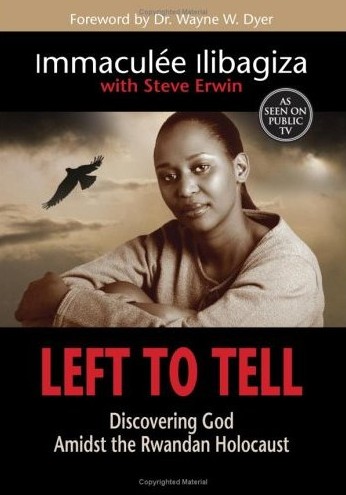
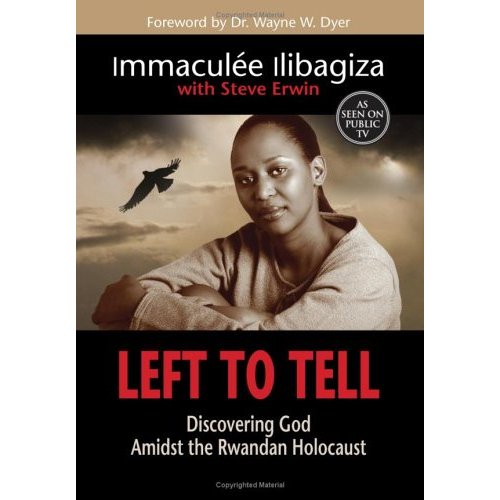
Immaculee Ilibagiza - An Inspirational Person

The other day I was watching the television, and Wayne Dyer was on talking to a live audience on the theme of Inspiration. He was talking about some of the people who inspire him, and one of them was Immaculee Ilibigiza.

Immaculee Ilibagiza grew up in a country she loved, surrounded by a family she cherished. But in 1994 her idyllic world was ripped apart as Rwanda descended into a bloody genocide. Immaculee's family was brutally murdered during a killing spree that lasted three months and claimed the lives of nearly a million Rwandans. Incredibly, Immaculee survived the slaughter. For 91 days, she and seven other women huddled silently together in the local pastor's cramped bathroom, measuring three feet by four feet, while hundreds of machete-wielding killers hunted for them. The triumphant story of this remarkable young woman's journey through the darkness of genocide will inspire anyone whose life has been touched by fear, suffering, and loss. 'Left To Tell' is Immaculee's first book.

Wayne Dyer brought Immaculee up on stage and she spoke for a few minutes about her ordeal, and how she learned that it's important to forgive in spite of horrific actions like those in the Rwandan Holocaust. This isn't a book I have read, but after I'm finished with my current book it will be next.

What I also thought about was the fact that this lady inspired an inspirational man in Wayne Dyer, and it made me re-think about how I should begin living my life to be an inspiration to others. If I could inspire those who inspire others, then I'm really beginning to spread some good in the world.

It's always about taking small steps, and I'm taking those. Somewhere along the line I will take a big step, maybe that will be today... maybe tomorrow.

Wednesday, December 06, 2006

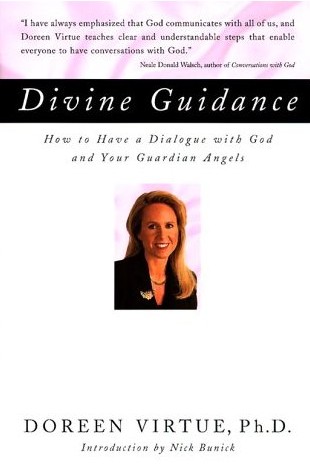
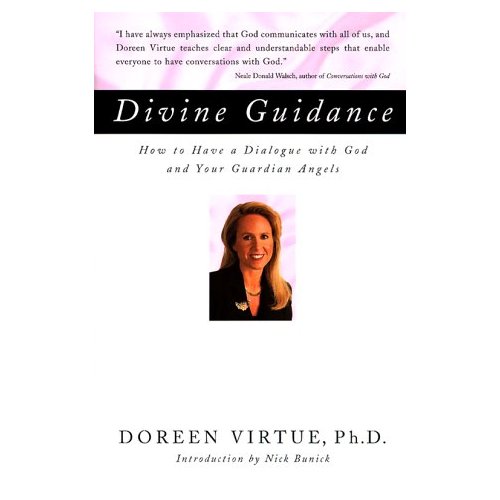
A Great Book - Divine Guidance

I'm always reading books these days, which is very funny if you could listen to me talk up to the age of about 25. I used to hate reading. In fact I chose my university degree and my subjects in high school based on the amount of reading required - less was better. As a result I studied a lot of subject that had numbers - Maths, Chemistry, Physics, Economics etc.

It's only been in the last few years that I've learned to appreciate the value of reading. I don't often get to story books, and mostly I read something non-fiction. Occasionally I'll pick up a story book... for myself of course, I don't just read Dr Seuss to my daughter!

I'm currently reading 'Divine Guidance', by Doreen Virtue, the second book of hers that I've read.

This book is a very helpful book for those looking to learn more about tapping into intuition and psychic information. It's actually the best book I've read on the topic and I would highly recommend it.

From the publisher:
In this text Dr Virtue explains how people are equally gifted in the ability and potential to communicate with God and angels. Through meditation, simple lifestyle changes, and understanding how to phrase questions, people can learn to break down the communication barriers, and learn how to listen.

Divine Guidance tells you how to have a dialogue with God and your guardian angels. Her central tenet is that everyone has the ability to talk with God and the angels; everyone has the ability to solve their problems with the help of these Divine powers. If you have financial problems, this book will tell you how to get out of jeopardy. If you're in a bad relationship, this book will guide you to something better. If a loved one has just passed away, this book will help you through those trying times. All of your most intimate questions can be answered by knowing who to ask and how to phrase the questions. Find the simplest, most effective, and life-affirming advice around-read Divine Guidance