Showing posts with label Questions About Life. Show all posts

Tuesday, May 26, 2009

Jack of Clubs

Take a moment to imagine you are in the audience at a small, intimate theatre, watching a magic show. The magician hands a deck of cards to a random member of the audience, asks her to check that it's an ordinary pack and give the cards a shuffle. The magician then turns to another member of the audience and asks him to name a card at random.

"Jack of Clubs," he says.

The magician covers his eyes, takes the deck of cards, and after some fumbling around he pulls out a card.
What is the probability of the card being the Jack of Clubs?

Depending on your knowledge of cards, you probably already have an answer. Is your answer one in fifty-two on account that there are 52 cards in an ordinary deck?

That might be one answer. Keep thinking.

What happens in life when we a challenge is posed of us? We look at what we know and we make a few assumptions and presto, we have an answer. But did we consider all the available information?

Had you forgotten that it was a magician pulling out the card. That could make a difference. If you were at a theatre and the magician on stage was performing wouldn't you expect him to pull the Jack of Clubs? In fact you'd probably say he would have an almost 100% likelihood that he would pull the Jack of Clubs. The magician wouldn't be in business for long if his tricks didn't work!

Are they the only two answers? 1-in-52 or 100%?

What about that there was no chance it was the Jack of Clubs because the card was in the pocket of the lady who shuffled the deck?

Perhaps the magician pulls a ten dollar bill from his pocket and "Jack of Clubs" is written on it with a marker pen.

Maybe the magician isn't really that good and botched the trick!

The reality is that there is no correct answer to this problem, but what's interesting is it makes you think about the other possibilities, rather than just the obvious one or perhaps two answers.

The funny thing though, is that the answer 1-in-52 is actually probably the least likely to be the correct answer. Magicians don't rely on luck or probability to perform their tricks. Or else they wouldn't be called magicians, they would be called unemployed!

The opportunity here is to realize that the more we think about a problem or challenge the more options arise. Sometimes the obvious answer is incorrect and assumptions can be very dangerous!

Thursday, April 16, 2009

Susan Boyle


For those of you who haven't seen the video of Susan Boyle singing "I Dreamed a Dream" from Les Miserables, it's worth taking a look. Similar to the story of Paul Potts a little while ago, here is an unknown British lady, aged 47. Never married and never even kissed! Unfortunately, you can see from her appearance why she was laughed at when she said she wanted to become a professional singer, and be as famous as Elaine Paige (http://www.elainepaige.com/).

When she began to sing it was truly amazing. See for yourself...

What's remarkable is that she's 47, and up until now had been an unknown. Who knows how small the circle was before April 11th who had heard Susan sing. It's fantastic that a talent contest can uncover such hidden talents. It's also sad that it had to be a talent contest that uncovered her talents. I say sad because our society highly values fame. In fact we take fame as an indicator of talent, ability, knowledge, intelligence, intuition etc. It seems that fame is the ultimate recognition of whether someone is good at what they do. That's what's sad, because Susan Boyle's talents were always there, but the world didn't know. She's no more talented now than she was last week, just a little braver.

The question for everyone is what talents do we all have that we choose to keep hidden under a rock, that we choose to keep in the closet, that we choose to keep to ourselves. What talents are we too afraid to share with others, and what's holding us back.

It takes a televised talent show to bring Susan Boyle to the world. And it's tremendous that she entered herself as a contestant for the show, or what other opportunities would have passed her by.

Undoubtedly it was the action she has finally taken to assert herself and put herself out there that has brought the rewards. In 47 years to never marry or be kissed says something about her track record. Who knows what ridicule she has endured in the past to cause her to make that her life.

It seems there are so many "armchair experts" who know better than everyone else, who calmly sit back and criticize, but this lady should be cheered, revered and acknowledged for taking a huge risk and putting herself on the line.

She has won, simply for taking the risk. Her life will be forever changed, for better or worse. One thing she cannot say now is that she "could've been, if only..." Now she will have the answer.
We should answer these similar questions for ourselves. We should take a risk and put ourselves out there. We should not criticize those who do that because they are the ones who are taking action, and action-takers deserve to be the winners.

"Take a chance! All life is a chance. The man who goes farthest is generally the one who is willing to do and dare." -Dale Carnegie

Thursday, January 08, 2009

It's my birthday...

Each year we celebrate that we lapped the sun. And I did it again. Hurray for me! I'm taking the day off.

Friday, April 04, 2008

Choices (Published Article)

The path we take in life is just that, it’s a path. Where that path goes is completely up to us. We make the choices and decisions which will guide our life in a certain direction.

In fact where we are today is a result of all the decisions and choices we have made up to this time. Look at every aspect of your life and think about how it came to be the way it is. Somewhere along the line you chose that to be a part of your life.

I was thinking about one of the conscious choices I make – my friends. On the weekend we had a party for some of our friends and there were fourteen of us in total. I was paid a compliment by one friend who didn’t know many of the others when she said, “Your friends are really nice people.”

It’s nice when someone pays you a compliment, and especially nice when they compliment your good judgement. We enjoy our friends and although we have only lived in Calgary for five years we have a strong network, which has taken time and energy to build.

I remember when my wife and I first came to Calgary. We didn’t know anyone and on weekends we would stay at home and play board games. Our phone would only ring when a telemarketer called, and I would relish the opportunity to speak with them!

We made a conscious effort to make friends. We played on teams through sporting socials clubs and we looked in every place we could think where friendly people might exist who could become our friends. We were prepared to put in a concerted effort to invite them for dinner or to organize outings together.

As a result we now have a strong network and find ourselves busy on most weekends, spending time with friends. In this column I have previously mentioned the value of time, and I have chosen to spend my time with good friends. These are the sorts of people we can rely on, who are honest and whom we can trust, with whom we have interesting conversations based on common interests and intellect. These are all people I could trust with my children or my wallet. They are people who make us feel special. These are people who enrich our life.

Becoming friends with all of these people took effort on our part, but the rewards are great. As life goes on I see that what makes our lives valuable is less concerned with the monetary wealth we have, but the golden friends around us.

No matter what situation you’re in now with regards to your friends or anything else in your life, ask yourself whether you would choose what you have now if given the opportunity to start fresh.

When you think about your friends could you trust them all? Are they always reliable? Do they ever let you down? Do you respect them? Do you get excited to see them? Do they make you feel good when you’re together? Do they make you feel like you are important to them?
It’s important to respect yourself so that you surround yourself only with the people who deserve your friendship. Along the way we have met many more people than we are now friends with. Our friends today are the ones we consciously chose to become friends with.

So far, the diligent effort and perseverance has resulted in a happy social life for us. Diligent effort and perseverance is a formula for success in any aspect of life.

Friday, January 04, 2008

Resolutions (Published Article)

At the beginning of the year so many people make resolutions... to lose weight, to get fit, to change jobs, to find a partner. It’s why gyms across the city are packed with people in January and February on a quest to shed some of the Christmas pounds. But why are the gyms returning to normal usage by March and April? Why is it that so many people don’t follow through on their new year resolutions? I’m as guilty as the next person for not following through on some of these goals.

Often a lack of time is blamed... or life gets in the way.

But, honestly, what is the reality? The reality is that the goal was not a high enough priority. I don't buy the reason that “there isn’t enough time”. We have all the time we’re ever going to have. We cannot create more time. We can make more time for the things that are of a high priority.

Let me give you an example. You may “not have time” to go to the gym today, but you do have time to work late, visit friends, watch television, go shopping or attend an evening course etc. I only use the example of going to the gym because it seems to be one of the most common resolutions.

So how can you make a new year resolution become a part of who you are, to become a new habit?

When NASA was first preparing its astronauts for space they were concerned of how the convex lens of their helmets would cause disorientation. So they had the would-be astronauts wear convex goggles which made everything appear upside down. After 21 days the astronauts’ minds had flipped the image back so that everything appeared normal even though they were still wearing the goggles. For a group of the astronauts they removed the goggles for one day on day 17, and found that for the mind to flip the images the 21 day period started all over again, even though the habit was broken for just one day.

From this we can conclude that it takes a minimum of three consecutive weeks of doing a new task before it becomes a habit. Make that four weeks to be on the safe side.

What stops people from doing something consistently for just three or four weeks? The answer - a decent reason. If the reason is not important enough and the want is not great enough then why would anyone do something different?

It’s about creating a strong reason, backed up with feeling, emotion and a concrete desire to change. It’s about creating a vision for where you want to get to. Seeing that vision clearly in your mind’s eye and having a knowing that you will get there. It’s about moving yourself towards that vision without hesitation and making time for it, because it is the highest priority. Any resolution with power needs to be a stepping stone to fulfilling the vision you have for yourself. If it’s part of your big plan then you’ll have reason to strive to achieve it.

One thing you’ll also know is that if things get uncomfortable, then you are moving yourself forward. When you are uncomfortable you are working outside your comfort zone and expanding it.

So, know where you want to get to. See that clearly in your mind. Visualize it every day. Set resolutions or goals that will propel you there and follow through every day and your life will change!

“The only thing worse than being blind is having sight but no vision.” - Helen Keller 1880-1968

Sunday, December 23, 2007

A Fourth Gift.

So I was discussing my parenting theory from my previous entry with my parents, whom I credit with being solid parental role models. They added a fourth gift that good parents give their children, and that's a good work ethic.

In life you will pay for everything at some stage. Sometimes you pay up front and reap rewards for a long time after, and sometime you get a lot early and pay at the end. This is true when it comes to everything - money, health, love, happiness etc.

The important part here is that hard work combined with smart work will generate results in the long term. Working hard from the outset, is paying for something at the start and reaping the rewards for a long time to come.

To increase the likelihood that someone realizes their life's goals, a strong work ethic is an essential ingredient.

Friday, December 21, 2007

Christmas Gifts

It's just a few days from Christmas now, and I was reflecting the other day on the whole theory of gift giving. With two young children we have gifts to give them, but as I thought about the best gifts I have received in my life, not one of them came wrapped in paper.

As concerned parents we find ourselves is discussions with other parents on the merits of certain pre-schools and educational philosophies, how much television children should watch and whether computer games with violence should be allowed. There are so many details that can be argued for and against.

When I think of what's important and what will carry our children forward to live a long and happy life, the details are quite insignificant. I feel it's the big things that matter when parenting. There's no way my wife and I will make all the right decisions on the details, but we can ensure we do the big things well.

As I see it there are three gifts we as parents need to give to our children. These gifts are not given once, but are continually given over a lifetime.

The first is unconditional love. Unconditional love is the solid foundation on which a steady life can be built. Unconditional love is love that is shown and demonstrated no matter what happens. Unconditional love is shown in the most trying situations, for example, when a family heirloom is broken, when the car has been written off or when failing grades appear in a report card. Unconditional love is the knowledge that someone is loved for who they are, not what they do or what they have. Unconditional love is something you carry with you everywhere you go as a protective shield against any potential harm. Unconditional love by its very nature is never lost... it is unconditional.

The second is the ability to think. And I don't mean this in the simplest form, for example if I said, "Think of a number between one and a hundred" I'm sure anyone could do that. That's not the thinking I'm referring to. Thinking is coming up with a solution to a problem. Thinking is inventing, creating. Thinking is deciding that you don't accept everything as it is but questioning why. Asking questions like, "Why are there so many species of tree? Why is the sky blue? Why do people get jealous? Why do people voluntarily put themselves in harm's way? The ability to think comes from the time and opportunity to do so. The less children are "fed" what to think and the more they are encouraged to create their own thoughts, the better the thinking muscle will be developed and the greater their ability to survive in an ever-changing world.

The third, and by no means any less important than the other two is faith. I don't mean religious faith, but faith in oneself. It's the faith in knowing that everything will turn out for the best because I am in control of my destiny. It's the faith in being able to rely on yourself to get the job done. It's the faith that whatever you do will result in success eventually. It's that inner knowing that you will have life full of triumphs. It's knowing that no matter what happens you can always bounce back stronger and even if you can't see the way forward it will present itself.

It's that knowing, supported by the unconditional love and coupled with the wherewithal to discover answers through clear thinking that forms a potent and unstoppable force for personal success.

Really, when you think about the trivialities that fill our time, there are but a few fundamentals that make it all happen in life. These are the greatest gifts of all.

Friday, November 30, 2007

Expectations (Published Article)

“It’s beginning to look a lot like Christmas…” so the tune goes. It seems that Christmas begins the day after Halloween, with the decorations, the music and all the paraphernalia that goes with it. And certainly it’s a fun time of year.

In fact the remarkable part of all this is that Christmas itself is in fact just one day. Actually for most people, the way it’s celebrated, it really is only an evening. Amazing then that we should spend nearly two months looking forward to it. Two months of thinking about people to buy for, two months of writing Christmas cards, two months of calculating a budget for everything and then spending double that…

It reminds me of another day that people historically spend an awfully long time and a lot of resources planning for – the wedding day. It will never cease to amaze me that people can spend a year planning for a wedding, yet funerals, which often are just as large gatherings can be organized in a week.

Anyway, I digress! In addition to the “looking forward” to Christmas there’s also the tremendous energy and resources that go into it. For those who work in the retail environment, it’s not the most fun time at all. With harried shoppers darting around, crowds of desperate people looking for the one special gift, and complaining people waiting too long for service, it all adds up to something less than “special”.

Then there’s the financial investment. Far too many household budgets get blown to smithereens in December each year. Children get spoiled, and many unnecessary purchases are made.

It seems that every year with all the preparations, for most people Christmas doesn’t really have a hope of living up to those expectations. When so much focus is put on a single event for an extended period of time, there’s bound to be disappointment. For many families, Christmas is yet another family celebration, with the usual conversations, the usual politics and the usual presents. But we fool ourselves into thinking that this year it will be different.

So why do we do this? We’re intelligent creatures? Isn’t doing the same thing over and over and expecting a different result the definition of insanity?

The interesting part of this is that by having a focus in the future, we have no need to pay attention to what’s happening today. We “drug” ourselves with the hopes and dreams of tomorrow, to delay the inevitable need of dealing with today. And this trick is everywhere in our lives. We are constantly looking forward, putting energy into the weekend, the next holiday, a party… anything, but not into the only thing we have – NOW.

If we put the same effort into enjoying today as much as we put into our hopes for the future, today would be so much better that we wouldn’t be so worried about tomorrow. We likely wouldn’t have the same personal issues, struggles or problems, because we would have dealt with them rather than ignore them and focus on the future. In turn we might find ourselves in a happier, more loving and financially secure place.

Think about putting the same effort into every day as you put into December 25th. It is when we live our life with enthusiasm for every moment that we have truly found a gift. Hence the line from another well-know Christmas song, “If every day could be just like Christmas, what a wonderful world it would be!”

Wednesday, August 29, 2007

Failures (Published Article)

A number of years ago there was a Nike commercial on television with Michael Jordan. As he walked through a dimly-lit corridor, Jordan’s voice comes on:

I've missed over nine thousand shots in my career.
I've lost almost three hundred games.
Twenty-six times I've been trusted with the game-winning shot... and missed.
I've failed over and over and over again in my life.
And that is why I succeed.


There are few people in this world who can say they have been more successful at anything than Michael Jordan was at basketball.

Life can be a struggle sometimes, and there are many times where things don't seem to go our way. Those are precisely the times when we need to take a step back and look at what is happening and find the lesson.

Our society mentality has become one of “keeping up with the Joneses”, and hand-in-hand with this is the strive for perfection or at least to appear perfect.

But perfection is an unattainable illusion. Nothing on Earth is perfect, and nobody is perfect, because perfection is a perception, which is subjective. What’s perfect for me, may be a disaster for someone else. In any case, everything is imperfect, and that’s why there’s evolution and change. Everything is always getting better or worse, so by definition it couldn’t have been perfect.

The people who spend the most time trying for perfection are the ones who spend the most time covering the realities in their life. They do this because it’s far easier to cover up than it is to actually face the fault and deal with it.

Imagine a house with rotten wood framing. Quickly covering over it with drywall is a far easier prospect than actually remediating the issue, although on the surface it might look the same.
Nevertheless, we’re told that perfection is the way to go, and as humans we look for the quickest and easiest way to the goal.

Society tells us that perfection is having children who are involved in five after-school activities; living in the perfect neighbourhood with the perfect picket fence and driving the perfect European vehicle into our pristine garage. You get the idea.

But what’s the point?

Being perfect doesn’t allow for mistakes, because perfect people don’t make mistakes. Not giving ourselves the freedom to make mistakes means that we aren’t giving ourselves room to learn.

When we fool ourselves into believing that we are always right, that we have “arrived” and that we know everything, it spells disaster, because it means we will stop learning and growing.
So what does this mean for the average person?

Do you know someone who “knows it all”. Where do these people end up? Usually making the same mistakes over and over and progressing very little if at all in their lives. Financial success does not mean success in every facet of life. You don’t need to look far to see wealthy people with dysfunctional home lives. But you can also just as easily find poor people who are tremendously happy with what they have.

No matter what age you’re at, it’s important to take a chance, take the road less travelled and put yourself on the line. Recognize that a “failure” is nothing more than an undesirable outcome from which you can learn.

Succeeding in life is not about being perfect. Successful people aren’t perfect. Successful people are prepared to fail and keep trying. We’re lucky Michael Jordan didn’t stop playing after losing his first game.

Thursday, August 02, 2007

The Ostrich (Published Article)

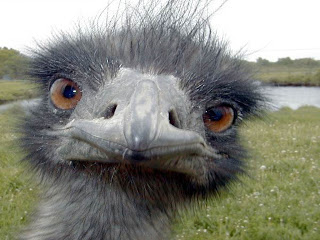
The Ostrich, officially named "Struthio camelus" is the largest of the 8,600 bird species, which exist today. Reaching a height of up to 2.6m these birds can weigh up to 135kg, cannot fly, but are very fast runners.

The long-held myth is that ostriches bury their head in the sand when they are frightened. The Canadian Museum of Nature's website states that- "If threatened while sitting on the nest, which is simply a cavity scooped in the earth, the hen presses her long neck flat along the ground, blending with the background. Ostriches, contrary to popular belief, do not bury their heads in the sand."

The term "sticking your head in the sand" has come to mean that you choose to ignore a bad situation, and hope that it will go away on its own. The unfortunate reality is that most of us take that action (really, a lack of action) when faced with a challenge. Sticking your head in the proverbial sand also prevents you from finding out more information that might help resolve the issue.

Every day I open the local newspaper to read about how people are affected by situations, how their life has become a living horror because of something that happened to them. Unfortunately most of these situations were preventable, but a lack of action allowed it to occur.

As children we are brought up with "A stitch in time saves nine" and "prevention is the best medicine", and these hold true for all of life's situations. The hard part is doing something about a potential future disaster rather than waiting for it to happen and then becoming involved in a stressful situation.

When you see something on your horizon take action now. Face your fears, get information, and move yourself to do something.

All too often we look at successful people and wonder how they get all the luck. I recently came across this a few weeks ago with a gentleman I worked with. He is in his fifties and recently moved away from Calgary into semi-retirement on Vancouver Island. He had just bought a boat and a large property overlooking the water.

Someone commented to me "Well it's alright for him. He has money!"

"Ahh yes!" I said, "but when he started dreaming about this ten years ago, he didn't. You're looking at his life nine and a half years into a ten year plan. No wonder it looks easy now, he's basically at the finish line."

No one became an "overnight success" without years of hard work before hand.

What was also interesting was how clear he could see his dreams even before they had materialised. Before he bought his boat he could visualise it, and he could even see where his dog would sleep. Having such a clear vision for what he wanted allowed him to know how to get there. He was able to take the right action because he knew where he wanted to end up. For many of us, it's having that clear vision of where we want to go that's the stumbling block.

When I asked the person who made the comment that this gentleman has "all the luck", I asked her what she wanted for her future. "To be happy," was the answer. But she couldn't tell me what "happy" looked like.

To make your future dreams become a reality it's important to imagine them, and see them clearly. You can't shoot for a goal that you can't see.

It's time to take our collective heads out of the sand, get informed, dream about our future and face our fears.

Wednesday, July 25, 2007

Change of Direction

This morning I handed in my resignation without any firm plans of where I'll be off to next... except to take a solid six weeks off to spend it with my wife and daughter, my parents who are coming up from Australia in mid-August, and the second child we're due with on September 6th.

One of the suppliers I regularly deal with said it was admirable that I would take off so much time, when people today are so focused on money, money, money. But I told her that in the last 12 years I have taken almost three years off work to travel and experience life.

Balance in life is a bit like communism... it's good on paper, but somehow it doesn't work in the real world. I've tried throughout my whole life to attain a kind of balance, and the best I've managed is three years off in twelve. But what's more important is to attain happiness. If you're happy at work and happy at home then the need for balance takes care of itself. The need for balance arises when we're unhappy and are constantly seeking relief somewhere else.

I always find it sad when people spend months and months looking forward to a week-long holiday. It's one thing to be excited for a holiday, but it's another to wish away the majority of your life for a couple of weeks a year. What about the rest of the time?

When I think of life I think of a dripping tap. It drips and drips a little bit at a time. Each drop could represent a day. Individually a drop is not significant, but collect many drops over time and you have a puddle. It's the same with life. To not enjoy one day in your life is not a big deal, but to not enjoy many of them - that's significant. And at some point the tap will dry up, and we don't know when that will be. What would you do with your last day? Would you spend it the way you're spending today? Today may be your last...

Make sure you enjoy every day, and get excellent value from your time. You never know how much more of it you have.

Monday, June 04, 2007

Taking A Risk (Published Article)

As a thirty-something Generation X’er, I am surrounded with friends who are in the midst of early-life crises. It seemed that for the Baby Boomers this crisis was “mid-life” in the forty to fifty age range. Now it seems to be happening earlier, because of all the opportunities we now have at our disposal.

This early-life crisis that seems to strike between 25 and forty is generally work or career related and the number of people I know personally who have made a complete change of career, gone back to study or taken extended leave to travel the world before 35 is amazing.

I’ve done all three.

What I noticed about my life and about others is how they become energized during and after this change. This energy is what carries you through the upheaval, and the fresh new energy afterwards is a sign that you’re on the right track. That’s enthusiasm for life.

Dale Carnegie said, “Enthusiasm is more than just zest for work. It is for the whole of life and living. If you have it, you have a priceless possession. Cherish it.”

I believe that enthusiasm for life comes when you are living your dream. Deep down we all know what we would do “in an ideal world”. For many of us it takes a personal tragedy or a life-threatening illness to make us change the way we live, to set us on the right track. A friend of mine in his late thirties, quit his high-paying, stressful job to chase his dream after he saw his brother die in a car accident.

If you’re thinking that you don’t feel enthusiastic about your job or your life, I’m sure you can find at least one thing that you’re enthusiastic about. Maybe it’s spending time with grandchildren, walking the dog, golfing, volunteering at church, working in the garden, skiing… it doesn’t matter. Think of that one thing, or the many things that get you excited. That’s the feeling you’re looking for; that feeling of anticipation when you start a new and exciting job, the thrill of a first date, or the excitement of seeing or learning something new.

It’s a great feeling when the path you’re taking in your life is completely in synch with your hopes and dreams. It’s not that difficult to be there. It’s all about making some decisions. Decide what it is you want in your life and what you don’t. One piece at a time, add or remove the respective aspects to your life.

The only catch is you’ll have to take a risk. This is obvious, really, because the risks you have taken so far in life had got you where you are today. To get somewhere else tomorrow, you’ll have to do something different, also known as taking a risk.

In my personal experience of taking risks, and from those I’ve observed, I see that risk-taking is nearly always a positive experience. Win, lose or draw, taking a risk means personal growth and perhaps a new perspective. I can attribute nearly all of the greatest experiences in my life to times when I took a risk. The bigger the risk, it seemed, the bigger the pay-off. Of course if a risk is taken and the result appears to be negative, it’s how we deal with that result that has the greatest effect on our life.

Thomas Edison discovered 10,000 ways not to invent a light bulb, before he found the right way. From Abraham Lincoln to Donald Trump, there are countless examples of hugely successful people who all took risks and failed, but picked themselves up and continued on.

Unfortunately for many of us, it takes only one small setback and we abandon chasing our dreams, relegating them to “unattainable dream” status.

In this respect we can learn a lot from children. Their life is all about experiments, taking risks, doing things they’ve never done before, falling down, getting hurt, but nevertheless, trying again until success presents itself.

Take a leaf out of a child’s book and take a risk! Go for it! Your life will never be the same again!

Friday, June 01, 2007

Facebook Phenomenon

For those of you who haven't become a www.facebook.com member, it's this fairly new free networking/personal web space product that allows you to keep in touch with everyone on it, and find old friends.

Yesterday an old friend from school, whom I literally have not seen or heard from for over ten years found me. (Having a unique name sort of helps that process a little). But it was amazing to re-connect with someone from the past so easily and efficiently.

When I compare these times of technology to 1992 when I spent a year in Germany, a time when there was no Internet, no email and very expensive international phone calls, you rely heavily on the traditional postal service, which we now call "snail mail", but at the time was the quickest method we had.

Every week my parents would write me two letters, one with the news from the family and one with sporting news, which included newspaper clippings for me to read. You can probably guess which parent sent which letter. In return I wrote a letter to my parents every week as well, in addition to letters to all my other friends. I cherished every letter I received and read every page of newspaper clippings. These letters were my connection to home.

Once a month my parents would call me for half an hour.

Now, living away from Australia I am able to email, access Australian news online, speak to my parents for free over the Internet, and reconnect with old friends in Australia and the rest of the world through Facebook.

Many people argue that technology is ruining the world, but if you take it in appropriate doses, it's making the world a better connected place. These days it will be nearly impossible to lose touch with someone.

Tuesday, May 29, 2007

Spiritual peace.

It occurred to me as I was walking around the campus of the George Washington University on our recent trip to DC, that as a species, humans spend a lot of time and energy studying ourselves.

Relating to health, body and mind, there are four and five year courses on physical fitness, medicine, nursing, physiotherapy, dentistry, occupational health, anatomy, biology, immunology, pharmacology, sociology, women's studies and more.

When you look at all of the courses available at the post-secondary level, a striking number are related to the study of ourselves. Why is it then that suicide rates are just as high now as they were in the 1950s? One scary aspect of that is that men are three times more likely to commit suicide than women.

When it comes to depression, more drugs are being prescribed than ever to treat this epidemic and larger volumes of younger people are on anti-depressant medication.

And no-one is surprised that obesity is a huge factor in the health of people in the 21st century. You only have to look at the people walking towards you on the street to see that poor diet and insufficient exercise plague far too great a proportion of the population.

In Canada the obesity rate for children under 18 has tripled (3% to 9%) in the last 30 years and more than doubled for the 25-34 age group and over 75 age group. While Canada's obesity rate is at 24%, it's at 30% in the United States.Officially obesity is calculated as having a BMI (Body Mass Index) over 30. What that means in real terms - An adult male who is 5'10" and weighs 210lbs or an adult woman 5'4" weighing 175lbs are considered obese. The only exception relates to body-builders, who have larger than average muscles.

So with all this study of ourselves, why do we have so many health problems?

Shouldn't we be getting healthier?

Why are they predicting that Generation X'ers will have a shorter life expectancy than their parents?

We study ourselves, but do we even know who we are?

We learn and learn but what do we know?

Theoretically we know so much about how we operate as human beings, but we don't know how to do it. It's one thing to understand intellectually, it's completely another to know and feel something spiritually.

You can read books about golf, but you'll never become a good golfer without swinging a club. Life is about experiencing first hand and learning "on the job". Life is a work in progress.

It seems with all our attention we have lost the focus.

The goal should be pure happiness, spiritual peace, calmness. But it seems our goals are status, achievement, material wealth, knowledge, power and the rest of what Gordon Gekko espouses in the movie 'Wall Street'. Greed is not good if it makes you sad.

Our education system does not encourage learning for the sake of happiness. It encourages learning to "make it in life", to gain employment and to become successful. Unfortunately success is rarely defined as happiness, as serenity.

I never once had a meditation class at school. No one ever told me that I could be happy without everything that money can buys, and in fact that the only things that make you happy are what money can't buy.

Indeed many of the health issues faced by people today are not solely because McDonald's seems to be on every street corner. Free will continues to exist. Obesity, depression, suicide, and other social issues derive themselves from deeper issues related to lack of self-worth and insecurity.

As a race we need to spend less time studying ourselves and more time understanding ourselves, not on an intellectual level, but on a spiritual and holistic level.

We should feel what our body needs. Ask it. Trust that the answer is correct. Know that if we are true to ourselves and trust what our body tells us we need we won't go wrong.

It's only when we choose to believe what someone else thinks about us as the truth, that we run into problems.

Wednesday, May 23, 2007

We're back!

We're back... but our luggage is still on holidays!

After a week of travelling, wearing down the rubber on our shoes, developing monster blisters (not me, my wife did!), seeing more American history than Abraham Lincoln, and eating more food than we should have eaten in two weeks we're back in Calgary. Unfortunately I can't say the same about our poor bags.

We were scheduled to return from Philadelphia via Chicago into Edmonton at 10:30pm. But as our flight to Chicago was delayed by an hour and we only had an hour layover in Chicago, we would have missed our connecting flight. So we re-routed through Toronto, on a later flight. We arrived at 1am into Edmonton, but 48 hours later, our luggage is still officially somewhere between Chicago and Edmonton... although I have a sneaking suspicion it's sitting in some dark corner of the Edmonton airport.

Luggage issues aside, we had an awesome time. It was great to see the originals of the great US historical documents, like the Declaration of Independence and the Constitution with its amendments. I did learn a lot about north American history, and came to realize something new about the United States.

The country really is a lot poorer than it lets on. When you figure how much the government pays for the various wars it fights, money that could be allocated to looking after it people, you can see visible signs that there really isn't so much prosperity.

It struck me on the first day we were there. Our hotel was near the Lincoln Memorial, which is at one end of the famous Reflecting Pool. We walked along the Reflecting Pool from the Lincoln Memorial past the Washington Monument to the Capitol building. I was staggered that the Reflecting Pool was green with algae and slime. The grass surrounding the Pool was patchy at best, but riddled with weeds and not mown. Actually a very untidy sight that I would expect to see in a poor ex-Soviet republic. Then, rather than having a pretty building where food, drinks and souvenirs were sold, it was literally a tent, and the washrooms were a row of Port-A-Potties. Hardly impressive.


In general many of the buildings were run-down, and poorly maintained. In many ways it did remind me of the many poor European cities I had visited, certainly not the image United States would like to portray to the outside world.

When you go further and look at the health system, frailty of the economy, and the general slide of the nation from the world's primary economic powerhouse, to a diminishing influence, it all bodes poorly for the US.

As a Canadian (I think of myself as one, as it is the place I call home) it is sad for me to see our nearest neighbour in such strife, and hopefully the ill effects will not creep to far across the border.

I'm not holding my breath.

Tuesday, May 22, 2007

Slavery

One theme that we noticed on this trip, similar to our other trips to the United States is a recurring theme of the abolition of slavery in the country, something the nation is very proud of.

What was interesting however if the definite racial division that still exists. Having always lived in a country that is predominantly of the same skin colour that I belong to, I had never really experienced any real visible racial segregation.

This trip to Washington DC and Philadelphia opened my eyes a little. It's true that there are no more "slaves", but it seems the people of African descent are still "servants". It seemed there were two classes of jobs, one for the black people and one for the rest. The blacks were in lower class jobs (and I say that with all due respect, but they are generally thought of as undesirable or dirty, but they are by no means any less important than any other job role our world requires to operate efficiently)- McDonald's and fast food restaurants, security guards, cleaners, waiters etc. Now, absolutely we saw black people wearing suits and working in high-demand jobs, but it seemed that we almost never saw any white people working in the first list of jobs.

We took a tour of the Arlington Cemetery in DC, and the bus drivers were all black, but the guides were all white.

I now understand more what Oprah talks about when she says racism still exists in the USA in a big way. Although there is officially no slavery, it is apparent that there are jobs that white people won't do because it's below them, but are happy to see black people work at.

Doing a job because you are owned by your master and having now choice is one kind of oppression, but being free and still feeling like you don't have a choice is a whole new kind of oppression... mental oppression. The kind that the Soviet Union wielded over it's "republics" like the Baltic States.

Slavery is abolished, but there is still some work to go before the races could be considered equal.

Friday, May 04, 2007

The Secret (Published Article)


I'm sure many of you had seen the movie or read the book "The Secret". It's a very well marketed concept, but the interesting thing is that nothing in there is really revolutionary, and neither does it claim to be.

Briefly, “The Secret” is the Law of Attraction, which states that you will attract into your life what you think about, whether it is positive or negative. Your thoughts determine your destiny.

What I found interesting was that so many people underestimate the power of intention and positive thoughts. Look around in your own life at what you have. What you see physically in your world - your friends, relationship, job, possessions, wealth etc are all a manifestation of your emotional, spiritual and physical well being. For example, if you are emotionally depressed, you may have very few friends. If you believe that "money is evil" then you are unlikely to be rich. If you don't place health as a priority in your life you may be overweight or underweight and unfit.

To change anything on the outside, we must first change on the inside. You won't become fit and healthy if you don't have the internal desire. You won't become wealthy if you think about being poor.

After changing our attitude, we must then change our actions. Ideas or words without actions will produce little more than ideas alone.

Colonel Harland Sanders, the founder of Kentucky Fried Chicken, started the business as a retired man with a small pension and an old car, but with a chicken recipe he knew in his heart was a winner. He approached restaurant owners and planned to sell his chicken recipe to them. In return they would give him a residual for every piece of chicken they sold - 5 cents per chicken.

The first restaurateur he called on turned him down. So did the second, and the third. In fact, the first 1008 sales calls Colonel Sanders made ended in rejection. Still, he continued to call on owners as he traveled across the USA, sleeping in his car to save money. Prospect number 1009 gave him his first "yes" and after two years of making daily sales calls he had signed up a total of five restaurants. Still Harland pressed on, knowing that he had a great chicken recipe and that someday the idea would catch on. The Colonel's smiling face in so many cities across the world shows that the idea did catch on. Colonel Sanders franchise actually helped many people succeed in the restaurant business.

Colonel Sanders had an idea, and a positive attitude that his idea would succeed. But the path to success isn't just about wishful thinking. Success is due to action, action and more action.
I guess my point is that some people criticize “The Secret” because it seems so abstract. I don’t think any of those people in the movie are saying that by thinking about something it will magically appear. What does happen is that thinking certain thoughts will put you in the correct frame of mind to see certain opportunities and then have the courage and foresight to act correctly to make the dreams materialize.

The secret to a happy and successful life lies in, firstly, knowing exactly what you want, and secondly focusing your attention on achieving that. Setting goals and making time to achieve them is the best way to advance forward.

Every day when you wake up you begin the rest of your life. Every morning you decide how you will live that day. You choose your own life and your destiny.

Friday, April 06, 2007

Don't lose sight...

I heard a comment directed at me yesterday that I hear quite often, "Is there anything you don't do?"

My answer is usually, "I do most things." And that's the way I like it. People who know me well know how many different things I'm involved with, and what hobbies or pastimes I have. I do a lot, and I'm interested in doing a lot. My life consists of very little inactive time, and I feel I get great value for my time. Though sometimes all these activities can get a little overwhelming I'd rather have that than sit around wondering what to do next.

I guess the reason I do so much, (other than my lack of television viewing, which has already been discussed at length) is because I'm interested in doing a lot of different things. Why shouldn't I? Really, what value does it add to my life to not be interested in doing something?

For example... I enjoy painting, and I enjoy going to the theatre, but I also enjoy exercising, dinner parties, meeting new people, camping, travelling, investing, gardening, renovating, golf, ten-pin bowling, watching sport, walking, writing, reading and spending time with friends and family.

Is there a reason I shouldn't enjoy all of those activities?

Is there a reason I can't enjoy more activities and spend time doing them? Absolutely not!

If I want to take up yoga, sewing, fishing, cycling, swimming or playing the piano, can anyone stop me? Absolutely not!

Does it matter how good I am at any of those activities? Absolutely not!

As it turns out I'm pretty good at ten-pin bowling. I averaged 187 in the last season's league. This was the second highest average in our Monday-night Mixed League. I'm not good enough to make it to the TV leagues and bowl in any sort of championship, but I'm a pretty good league bowler on a Monday night. My point here is that even if I sucked at bowling there's no reason for me not to bowl if I enjoy myself. Whether I average 187 or 87 the point of bowling on a Monday-night mixed team is to have fun.

Far too many people don't attempt something because they are worried about how good they will be at the activity. When I started bowling my average was 135. I took some lessons, persevered and practiced and after two years I was bowling in the 180s. But my enjoyment for the game didn't change, I just got a bit better at it. There were still the same frustrations and challenges.

I took up painting a few years ago, and I quite enjoy it. It's very relaxing and I feel a sense of accomplishment after completing a piece. I've had my work exhibited at a few places, and after my first exhibition I hadn't sold anything and I spoke with my grandmother, a recognised artist in Australia, and her words were, "It doesn't matter whether you sell anything, so long as you enjoyed having you art exhibited for people to see."

I realised how often we lose sight of the real point in doing things. Far too often people get carried away with winning at all costs, when we're really participating for enjoyment and perhaps exercise or self-improvement.

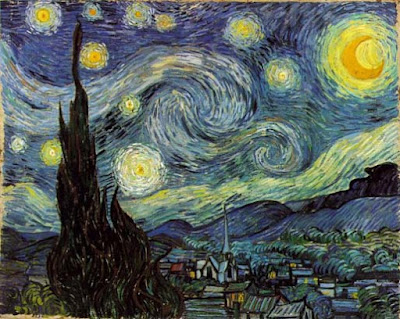
Don't let anyone tell you you're not good enough to do something. Vincent Van Gogh sold one painting when he was alive. Should he have never painted?

Monday, April 02, 2007

The Value of Time (Published Article)

Have the words “I just don’t have enough time” ever passed your lips? Have you ever wished for an extra one or two hours in the day?

It seems to be a common problem, but it’s not that there isn’t enough time, it’s that the time we have available isn’t being used efficiently.

Time isn’t something we can change, but our use of it is. Somehow people like Donald Trump seem to find enough time, so how can we squeeze a little more out of the orange?

Firstly, consider how important time is for you, and how much time is wasted every day. I treat my time like a scarce commodity, because I’m never sure just how much more of it I’ll have. Time is my only non-renewable resource.

If you work full-time, then you’re donating forty or more hours per week. Unless you can increase your hourly rate or decrease your expenses, this time spent is a given.

But what about the rest of your time?

A year or so ago my life came to a crunch. I felt I was close to a breakdown because I was overdoing it, committing to too many projects and trying to get too much done. What was disconcerting was that I felt I wasn’t giving enough attention to the parts of my life I valued most. I think most of us can relate to that.

So I wrote a list of the top ten ways I’d like to spend my time, and I compared it to the top ten ways I actually spent my time. The difference was staggering.

That was the day I gave up television.

Here are some of the ways I maximize the value I get from my time. I won’t spend time with people who don't appreciate me. I am continually trying to improve myself and my life and I actively enjoy the time I have doing what I place high on my priorities - reading, painting, exercising, socializing, writing, meditating, traveling, and most importantly being a Dad and husband.

An interesting statistic: The average Canadian watches television for 21.4 hours per week (source Stats Canada). Over a lifetime of say seventy-five years, that's 9 years and 193 days spent in front of the television.

Think about what you’ve achieved over the last nine or ten years and realize that’s what you might be giving up.

I didn’t watch 21.4 hours a week, but I had my weekly shows, and a few others I liked. But I saw how those shows got in the way of doing what I really wanted to do. Watching television wasn’t in my top ten.

By giving up television (I now watch between a half and one hour per week) my available time is more than nine years longer than the average Canadian.

On the other hand a fifty-year study completed in 2004 by BUPA's Health Information Team in the U.K. stated that smoking cuts life expectancy by ten years. So when you compare watching television to smoking, which continually gets bad press, you effectively miss out on about the same amount of time to actively live.

It's important that we not only respect our own time, but even more importantly, the time of others. It is only by being active in the time we have that we can accomplish and grow.

"I find television very educating. Every time somebody turns on the set, I go into the other room and read a book" - Groucho Marx (1890-1977)

If you have any comments, I’d like to hear them. Please email me at matthew@pagehanify.com

Wednesday, March 28, 2007

Choosing the Path


The path we take in life is just that, it's a path. Where that path goes is completely up to us. We make the choices and decisions which will guide our life in a certain direction.

In fact where we are today is a result of all the decisions and choices we have made up to this time. Look at every aspect of your life and think about how it came to be the way it is. Somewhere along the line you chose that to be a part of your life.

If you're not sure then think about these questions...

If you had a chance to live with anyone you wanted, and you had no prior history of living with anyone, who would it be? Would it be the person or people you currently live with? If not, why not? What would you choose differently starting tomorrow?

I think of my grandparents' generation and the fact that they were expected to stay married for ever through hell or high water. What if you made a poor decision in marrying the person you did. You were committed for ever to that poor decision and felt unable to make a good decision to leave the situation for something better. It very restricting and stressful when you feel you cannot undo a decision, or at least make one for whatever obligation.

Where would you live? Would you live in the town or city you currently live in? Would you live in the country, on an acreage, on an island? Would you live in a bigger city like London, Paris or New York? Would you live in a warmer climate, or a colder climate? Hawaii, southern France, Tuscany, northern Australia, Sweden?

I know that I wouldn't live in Calgary. Having lived in Australia, UK, Germany and Canada, I can say that my living conditions here are very good, and opportunities have been afforded to me that may not have come about had I lived elsewhere. I love being a part of the booming Calgary and Alberta economy. But the weather is cold, too cold for a Australian used to plus forty in Summer and highs around ten to fifteen degrees in Winter. I would choose a warmer climate. The Mediterranean looks good to me, perhaps also Hawaii or a smaller centre in Australia. But for me there's a time and a place for everything. Right now, my place is Calgary, and I'm happy to live here, though if I had to pick a place to live permanently, this would be my number one choice.

If you could work at anything and it would pay you enough that you could live comfortably, whether that's the same as you get now, or more if required, what would you do? What work would choose? What dream job would you love to work at and have the ideal situation of getting paid to do it?

I remember seeing an interview with Greg Norman, the "Great White Shark", legendary Australian golfer, winner of two British Opens and former World No 1 golfer. At the time when he was at the top of his golfing prowess, he said that he felt he had to be one of the luckiest people in the world, because he loved playing golf and he was paid millions to do it.

Other questions to ask would be, would you like to have more children or less children, be fitter or healthier, travel more or be more stable, have more or different hobbies or interests, different friends, more excitement or less excitement?

Every aspect in our life is a result of the choices we make and have made.

One final question to ponder. If you could choose your personality, how would it be? Would you be more energetic, more outgoing or quieter, a better listener or a better talker, more friendly or more or less anything?

As you think about that remember that every morning when you wake up, you choose your personality. You choose how you will be that day. You choose it if will be a good day or a bad day.

In my book, every day is a good day to be alive.