Tuesday, May 22, 2007

Slavery

One theme that we noticed on this trip, similar to our other trips to the United States is a recurring theme of the abolition of slavery in the country, something the nation is very proud of.

What was interesting however if the definite racial division that still exists. Having always lived in a country that is predominantly of the same skin colour that I belong to, I had never really experienced any real visible racial segregation.

This trip to Washington DC and Philadelphia opened my eyes a little. It's true that there are no more "slaves", but it seems the people of African descent are still "servants". It seemed there were two classes of jobs, one for the black people and one for the rest. The blacks were in lower class jobs (and I say that with all due respect, but they are generally thought of as undesirable or dirty, but they are by no means any less important than any other job role our world requires to operate efficiently)- McDonald's and fast food restaurants, security guards, cleaners, waiters etc. Now, absolutely we saw black people wearing suits and working in high-demand jobs, but it seemed that we almost never saw any white people working in the first list of jobs.

We took a tour of the Arlington Cemetery in DC, and the bus drivers were all black, but the guides were all white.

I now understand more what Oprah talks about when she says racism still exists in the USA in a big way. Although there is officially no slavery, it is apparent that there are jobs that white people won't do because it's below them, but are happy to see black people work at.

Doing a job because you are owned by your master and having now choice is one kind of oppression, but being free and still feeling like you don't have a choice is a whole new kind of oppression... mental oppression. The kind that the Soviet Union wielded over it's "republics" like the Baltic States.

Slavery is abolished, but there is still some work to go before the races could be considered equal.

Friday, May 04, 2007

The Secret (Published Article)


I'm sure many of you had seen the movie or read the book "The Secret". It's a very well marketed concept, but the interesting thing is that nothing in there is really revolutionary, and neither does it claim to be.

Briefly, “The Secret” is the Law of Attraction, which states that you will attract into your life what you think about, whether it is positive or negative. Your thoughts determine your destiny.

What I found interesting was that so many people underestimate the power of intention and positive thoughts. Look around in your own life at what you have. What you see physically in your world - your friends, relationship, job, possessions, wealth etc are all a manifestation of your emotional, spiritual and physical well being. For example, if you are emotionally depressed, you may have very few friends. If you believe that "money is evil" then you are unlikely to be rich. If you don't place health as a priority in your life you may be overweight or underweight and unfit.

To change anything on the outside, we must first change on the inside. You won't become fit and healthy if you don't have the internal desire. You won't become wealthy if you think about being poor.

After changing our attitude, we must then change our actions. Ideas or words without actions will produce little more than ideas alone.

Colonel Harland Sanders, the founder of Kentucky Fried Chicken, started the business as a retired man with a small pension and an old car, but with a chicken recipe he knew in his heart was a winner. He approached restaurant owners and planned to sell his chicken recipe to them. In return they would give him a residual for every piece of chicken they sold - 5 cents per chicken.

The first restaurateur he called on turned him down. So did the second, and the third. In fact, the first 1008 sales calls Colonel Sanders made ended in rejection. Still, he continued to call on owners as he traveled across the USA, sleeping in his car to save money. Prospect number 1009 gave him his first "yes" and after two years of making daily sales calls he had signed up a total of five restaurants. Still Harland pressed on, knowing that he had a great chicken recipe and that someday the idea would catch on. The Colonel's smiling face in so many cities across the world shows that the idea did catch on. Colonel Sanders franchise actually helped many people succeed in the restaurant business.

Colonel Sanders had an idea, and a positive attitude that his idea would succeed. But the path to success isn't just about wishful thinking. Success is due to action, action and more action.
I guess my point is that some people criticize “The Secret” because it seems so abstract. I don’t think any of those people in the movie are saying that by thinking about something it will magically appear. What does happen is that thinking certain thoughts will put you in the correct frame of mind to see certain opportunities and then have the courage and foresight to act correctly to make the dreams materialize.

The secret to a happy and successful life lies in, firstly, knowing exactly what you want, and secondly focusing your attention on achieving that. Setting goals and making time to achieve them is the best way to advance forward.

Every day when you wake up you begin the rest of your life. Every morning you decide how you will live that day. You choose your own life and your destiny.

Thursday, May 03, 2007

Awesome!

Last night was my first night as a Group Assistant on a Dale Carnegie course and it was awesome. It began with some nerves. I thought about how well I knew my previous group and how we had become friends, and now I was back at the start with 35 unfamiliar faces.

But it wasn't the same. I was in the class knowing the material already and I had extra confidence that the others didn't have. I was able to mix with the group and talk easily with people, going up to complete strangers and start a conversation. And by the end of the night I knew almost everyones first and last name.

These are two skills that I always believed belonged to others, but now I see in myself that same ability and it was an awesome realisation.

It was also a lot of fun, even more than the first time, because the nerves left very quickly, and the ability to really enjoy the time was there.

Finishing Dale Carnegie for the first time was a great experience. Starting it all over again is simply awesome!

Friday, April 20, 2007

I Made It!

Well, last night I finished my Dale Carnegie course and was voted by the group to receive the Award for Highest Achievement, an award they only give to one person in the class. It's for the person who has demonstrated the principles of the course to the highest level. It was quite humbling, and for a moment I was lost for words.

But only for a moment!

I will begin as a Group Assistant on another Dale Carnegie course in a week's time. And I'm excited to continue my path with Dale Carnegie.

Tuesday, April 17, 2007

A Step Closer...

Today I became a step closer to realising my dream of becoming a professional speaker and coach. I have been taking the Dale Carnegie course and I finish this Thursday. Tentatively I will begin as a group leader in another twelve-week course starting the following Wednesday (April 25th).

I have shown a lot of interest to the organization that runs the courses in Calgary that I would like to become a Trainer and they are taking steps now to facilitate that.

It is an exciting development and one that will start me on a new path.

The Dale Carnegie program started almost a hundred years ago and resonates today almost unchanged because it deals with the fundamentals in life, relating to having better relationships with people, being a strong leader and an effective communicator.

I'll keep you posted as to my progress.

Monday, April 16, 2007

Brainstorming Your Own Goals

One of the toughest things for so many of us to do is decide what it is we want to do with our life. Even when the pressure of earning an income is removed, as in retirement, it's a known fact that retirees who don't have something to keep them occupied die sooner than those who do.

For the Baby Boomers the crunch seemed to come in the forties and fifties when they hit a mid-life crisis, suddenly re-assessing their lives, what they had done and where they were going.

For Generation X (the children of the Baby Boomers) the problem seems to come about earlier in life. I can't count on both hands the number of my friends in their late twenties and early thirties who are changing careers, taking big chunks of time off (a year or more) to travel, going back to school or whatever to chase their dream. I have gone and continue to go through the same issues, and it's a tough time if you're stuck with no idea how to move forward.

One exercise I found helpful was a kind of brainstorming your goals. Sit down with a piece of paper and write 100 goals that you want to achieve given no restrictions and unlimited opportunities. This would include health, financial, personal, career, achievement, recognition goals and anything else that you can possibly imagine you would like in your life, no matter how big or small.

Doing this exercise, which takes between one and two hours I found the first forty or fifty quite easy to rattle off, but as I wrote more it became harder and harder and I had to really think about each one.

I did this with my wife. We sat opposite each other in a cafe and wrote down our goals independently. Then after we were finished we read them to each other one by one. It was a great learning experience for me about my wife as well as for myself.

The exercise forces you to think and re-think what you want out of life, and a theme to many of the goals will probably become fairly evident.

"Enjoyment is not a goal, it is a feeling that accompanies important ongoing activity" - Paul Goodman (1911-1972)

Friday, April 06, 2007

Don't lose sight...

I heard a comment directed at me yesterday that I hear quite often, "Is there anything you don't do?"

My answer is usually, "I do most things." And that's the way I like it. People who know me well know how many different things I'm involved with, and what hobbies or pastimes I have. I do a lot, and I'm interested in doing a lot. My life consists of very little inactive time, and I feel I get great value for my time. Though sometimes all these activities can get a little overwhelming I'd rather have that than sit around wondering what to do next.

I guess the reason I do so much, (other than my lack of television viewing, which has already been discussed at length) is because I'm interested in doing a lot of different things. Why shouldn't I? Really, what value does it add to my life to not be interested in doing something?

For example... I enjoy painting, and I enjoy going to the theatre, but I also enjoy exercising, dinner parties, meeting new people, camping, travelling, investing, gardening, renovating, golf, ten-pin bowling, watching sport, walking, writing, reading and spending time with friends and family.

Is there a reason I shouldn't enjoy all of those activities?

Is there a reason I can't enjoy more activities and spend time doing them? Absolutely not!

If I want to take up yoga, sewing, fishing, cycling, swimming or playing the piano, can anyone stop me? Absolutely not!

Does it matter how good I am at any of those activities? Absolutely not!

As it turns out I'm pretty good at ten-pin bowling. I averaged 187 in the last season's league. This was the second highest average in our Monday-night Mixed League. I'm not good enough to make it to the TV leagues and bowl in any sort of championship, but I'm a pretty good league bowler on a Monday night. My point here is that even if I sucked at bowling there's no reason for me not to bowl if I enjoy myself. Whether I average 187 or 87 the point of bowling on a Monday-night mixed team is to have fun.

Far too many people don't attempt something because they are worried about how good they will be at the activity. When I started bowling my average was 135. I took some lessons, persevered and practiced and after two years I was bowling in the 180s. But my enjoyment for the game didn't change, I just got a bit better at it. There were still the same frustrations and challenges.

I took up painting a few years ago, and I quite enjoy it. It's very relaxing and I feel a sense of accomplishment after completing a piece. I've had my work exhibited at a few places, and after my first exhibition I hadn't sold anything and I spoke with my grandmother, a recognised artist in Australia, and her words were, "It doesn't matter whether you sell anything, so long as you enjoyed having you art exhibited for people to see."

I realised how often we lose sight of the real point in doing things. Far too often people get carried away with winning at all costs, when we're really participating for enjoyment and perhaps exercise or self-improvement.

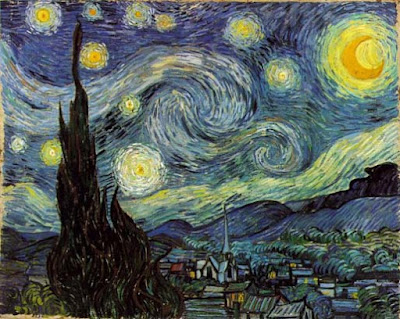
Don't let anyone tell you you're not good enough to do something. Vincent Van Gogh sold one painting when he was alive. Should he have never painted?

Monday, April 02, 2007

The Value of Time (Published Article)

Have the words “I just don’t have enough time” ever passed your lips? Have you ever wished for an extra one or two hours in the day?

It seems to be a common problem, but it’s not that there isn’t enough time, it’s that the time we have available isn’t being used efficiently.

Time isn’t something we can change, but our use of it is. Somehow people like Donald Trump seem to find enough time, so how can we squeeze a little more out of the orange?

Firstly, consider how important time is for you, and how much time is wasted every day. I treat my time like a scarce commodity, because I’m never sure just how much more of it I’ll have. Time is my only non-renewable resource.

If you work full-time, then you’re donating forty or more hours per week. Unless you can increase your hourly rate or decrease your expenses, this time spent is a given.

But what about the rest of your time?

A year or so ago my life came to a crunch. I felt I was close to a breakdown because I was overdoing it, committing to too many projects and trying to get too much done. What was disconcerting was that I felt I wasn’t giving enough attention to the parts of my life I valued most. I think most of us can relate to that.

So I wrote a list of the top ten ways I’d like to spend my time, and I compared it to the top ten ways I actually spent my time. The difference was staggering.

That was the day I gave up television.

Here are some of the ways I maximize the value I get from my time. I won’t spend time with people who don't appreciate me. I am continually trying to improve myself and my life and I actively enjoy the time I have doing what I place high on my priorities - reading, painting, exercising, socializing, writing, meditating, traveling, and most importantly being a Dad and husband.

An interesting statistic: The average Canadian watches television for 21.4 hours per week (source Stats Canada). Over a lifetime of say seventy-five years, that's 9 years and 193 days spent in front of the television.

Think about what you’ve achieved over the last nine or ten years and realize that’s what you might be giving up.

I didn’t watch 21.4 hours a week, but I had my weekly shows, and a few others I liked. But I saw how those shows got in the way of doing what I really wanted to do. Watching television wasn’t in my top ten.

By giving up television (I now watch between a half and one hour per week) my available time is more than nine years longer than the average Canadian.

On the other hand a fifty-year study completed in 2004 by BUPA's Health Information Team in the U.K. stated that smoking cuts life expectancy by ten years. So when you compare watching television to smoking, which continually gets bad press, you effectively miss out on about the same amount of time to actively live.

It's important that we not only respect our own time, but even more importantly, the time of others. It is only by being active in the time we have that we can accomplish and grow.

"I find television very educating. Every time somebody turns on the set, I go into the other room and read a book" - Groucho Marx (1890-1977)

If you have any comments, I’d like to hear them. Please email me at matthew@pagehanify.com